Resonator Bandwidth in Terms of Pole Radius
The magnitude  of a complex pole determines the
damping or bandwidth of the resonator. (Damping may be
defined as the reciprocal of the bandwidth.)
of a complex pole determines the
damping or bandwidth of the resonator. (Damping may be
defined as the reciprocal of the bandwidth.)
As derived in §8.5, when is close to 1, a reasonable
definition of 3dB-bandwidth  is provided by


where
is the pole radius, is the bandwidth in Hertz (cycles
per second), and  is the sampling interval in seconds.
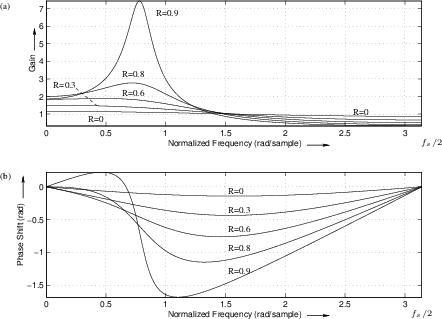
Figure B.6 shows a family of frequency responses for the
two-pole resonator obtained by setting  and varying . The
value of
and varying . The
value of  in all cases is
  , corresponding to
 . The analytic expressions for amplitude and phase response are
![\begin{eqnarray*}
G(\omega)\! &=&
\!\frac{b_0}{\sqrt{[1 + a_1 \cos(\omega T) + a...
... + a_1 \cos(\omega T) + a_2 \cos(2\omega T)}\right]\qquad(b_0>0)
\end{eqnarray*}](http://www.dsprelated.com/josimages_new/filters/img1385.png)
where
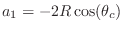 and
and  .
.
 |

Next Section:
Two-Pole Partial Fraction Expansion
Previous Section:
Trigonometric Identities, Continued