Frequency-Dependent Losses
The preceding derivation generalizes immediately to
frequency-dependent losses. First imagine each  in Fig.C.7
to be replaced by
in Fig.C.7
to be replaced by  , where for passivity we require
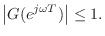
 as the impulse response
corresponding to . We may now derive the frequency-dependent
counterpart of Eq.
as the impulse response
corresponding to . We may now derive the frequency-dependent
counterpart of Eq. (C.31) as follows:
![\begin{eqnarray*}
y^{+}_{n+1,m}&=& g\ast y^{+}_{n,m-1}\;=\; g\ast (y_{n,m-1}- y^...
...
&=& g\ast \left[(y_{n,m-1}+y_{n,m+1}) - g\ast y_{n-1,m}\right]
\end{eqnarray*}](http://www.dsprelated.com/josimages_new/pasp/img3373.png)
where  denotes convolution (in the time dimension only).
Define filtered node variables by
denotes convolution (in the time dimension only).
Define filtered node variables by

Then the frequency-dependent FDTD scheme is simply

 by the
per-sample propagation filter . For computational efficiency,
two spatial lines should be stored in memory at time
by the
per-sample propagation filter . For computational efficiency,
two spatial lines should be stored in memory at time  :
:  and
and
 , for all
  . These state variables enable computation of
 , after which each sample of (
 ) is filtered
by to produce
for the next iteration, and
is filtered by to produce for the next iteration.
) is filtered
by to produce
for the next iteration, and
is filtered by to produce for the next iteration.
The frequency-dependent generalization of the FDTD scheme described in this section extends readily to the digital waveguide mesh. See §C.14.5 for the outline of the derivation.
Next Section:
Scattering Solution
Previous Section:
Young's Modulus as a Spring Constant