Implementation
The implementation below provides signal evaluation at an arbitrary time, where time is specified as an unsigned binary fixed-point number in units of the input sampling period (assumed constant).
![\includegraphics[scale=0.8]{eps/TimeRegisterFormat}](http://www.dsprelated.com/josimages_new/pasp/img1160.png)
![\includegraphics[scale=0.8]{eps/Waveforms}](http://www.dsprelated.com/josimages_new/pasp/img1161.png)
Figure 4.26 shows the time register  , and
Figure 4.27 shows an example configuration of the input
signal and lowpass filter at a given time. The time register is
divided into three fields: The leftmost field gives the number
, and
Figure 4.27 shows an example configuration of the input
signal and lowpass filter at a given time. The time register is
divided into three fields: The leftmost field gives the number  of
samples into the input signal buffer, the middle field is an initial
index
of
samples into the input signal buffer, the middle field is an initial
index  into the filter coefficient table
  , and the rightmost
field is interpreted as a number
, and the rightmost
field is interpreted as a number  between 0 and
  for doing
linear interpolation between samples and
for doing
linear interpolation between samples and  (initially) of the
filter table. The concatenation of and are called
(initially) of the
filter table. The concatenation of and are called
 which is interpreted as the position of the current time
between samples and
which is interpreted as the position of the current time
between samples and  of the input signal.
Let the three fields have  ,
,  , and
, and  bits,
respectively. Then the input signal buffer contains
bits,
respectively. Then the input signal buffer contains  samples, and the filter table contains
  ``samples per
zero-crossing.'' (The term ``zero-crossing'' is precise only for the case
of the ideal lowpass; to cover practical cases we generalize
``zero-crossing'' to mean a multiple of time
``samples per
zero-crossing.'' (The term ``zero-crossing'' is precise only for the case
of the ideal lowpass; to cover practical cases we generalize
``zero-crossing'' to mean a multiple of time
 , where
  is the lowpass cutoff frequency.) For example, to use the ideal lowpass
filter, the table would contain
is the lowpass cutoff frequency.) For example, to use the ideal lowpass
filter, the table would contain
 sinc
sinc .
.
Our implementation stores only the ``right wing'' of a symmetric
finite-impulse-response (FIR) filter (designed by the window method
based on a Kaiser window [362]). Specifically, if
,
![$ l\in[-LN_z,LN_z]$](http://www.dsprelated.com/josimages_new/pasp/img1174.png) , denotes a length
, denotes a length  symmetric
finite impulse response, then the
right wing
of
symmetric
finite impulse response, then the
right wing
of  is defined
as the set of samples for
is defined
as the set of samples for
![$ l\in[0,LN_z]$](http://www.dsprelated.com/josimages_new/pasp/img1176.png) . By symmetry, the
left wing can be reconstructed as
. By symmetry, the
left wing can be reconstructed as
 ,
,
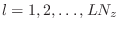 .
.
Our implementation also stores a table of differences
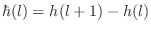 between successive FIR sample values in order to
speed up the linear interpolation. The length of each table is
between successive FIR sample values in order to
speed up the linear interpolation. The length of each table is
 , including the endpoint definition
 .
.
Consider a sampling-rate conversion by the factor
 .
For each output sample, the basic interpolation Eq.
.
For each output sample, the basic interpolation Eq. (4.13) is
performed. The filter table is traversed twice--first to apply the
left wing of the FIR filter, and second to apply the right wing.
After each output sample is computed, the time register is incremented
by
(4.13) is
performed. The filter table is traversed twice--first to apply the
left wing of the FIR filter, and second to apply the right wing.
After each output sample is computed, the time register is incremented
by
 (i.e., time is incremented by
  in
fixed-point format). Suppose the time register has just been
updated, and an interpolated output
in
fixed-point format). Suppose the time register has just been
updated, and an interpolated output  is desired. For
 , output is computed via
![\begin{eqnarray*}
v & \gets & \sum_{i=0}^{\mbox{$h$\ end}} x(n-i) \left[h(l+iL) ...
...$\ end}}
x(n+1+i) \left[h(l+iL) + \epsilon \hbar(l+iL)\right],
\end{eqnarray*}](http://www.dsprelated.com/josimages_new/pasp/img1186.png)
where  is the current input sample, and
 is the
interpolation factor. When
is the
interpolation factor. When  , the initial
  is replaced by
 ,
,  becomes
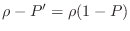 , and the
step-size through the filter table is reduced to
, and the
step-size through the filter table is reduced to  instead of
 ; this lowers the filter cutoff to avoid aliasing. Note that
is fixed throughout the computation of an output sample when
but changes when .
; this lowers the filter cutoff to avoid aliasing. Note that
is fixed throughout the computation of an output sample when
but changes when .
When , more input samples are required to reach the end of the
filter table, thus preserving the filtering quality. The number of
multiply-adds per second is approximately
 .
Thus the higher sampling rate determines the work rate. Note that for
there must be
.
Thus the higher sampling rate determines the work rate. Note that for
there must be
 extra input samples
available before the initial conversion time and after the final conversion
time in the input buffer. As
extra input samples
available before the initial conversion time and after the final conversion
time in the input buffer. As  , the required extra input
data becomes infinite, and some limit must be chosen, thus setting a
minimum supported
, the required extra input
data becomes infinite, and some limit must be chosen, thus setting a
minimum supported
 . For , only
  extra input samples are required on
the left and right of the data to be resampled, and the upper bound for
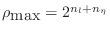
is determined only by the fixed-point number format, viz.,
extra input samples are required on
the left and right of the data to be resampled, and the upper bound for
is determined only by the fixed-point number format, viz.,
 .
.
As shown below, if  denotes the word-length of the stored
impulse-response samples, then one may choose
denotes the word-length of the stored
impulse-response samples, then one may choose  , and
, and
 to obtain
  effective bits of precision in the
interpolated impulse response.
effective bits of precision in the
interpolated impulse response.
Note that rational conversion factors of the form  , where
and
, where
and  is an arbitrary positive integer, do not use the linear
interpolation feature (because
is an arbitrary positive integer, do not use the linear
interpolation feature (because
 ). In this case our method reduces
to the normal type of bandlimited interpolator [97]. With the
availability of interpolated lookup, however, the range of conversion
factors is boosted to the order of
). In this case our method reduces
to the normal type of bandlimited interpolator [97]. With the
availability of interpolated lookup, however, the range of conversion
factors is boosted to the order of
 . E.g., for
 ,
,
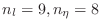 , this is about
  decimal digits of
accuracy in the conversion factor . Without interpolation, the
number of significant figures in is only about
decimal digits of
accuracy in the conversion factor . Without interpolation, the
number of significant figures in is only about  .
.
The number of zero-crossings stored in the table is an independent
design parameter. For a given quality specification in terms of aliasing
rejection, a trade-off exists between and sacrificed bandwidth.
The lost bandwidth is due to the so-called ``transition band'' of the
lowpass filter [362]. In general, for a given stop-band
specification (such as ``80 dB attenuation''), lowpass filters need
approximately twice as many multiply-adds per sample for each halving of
the transition band width.
As a practical design example, we use  in a system designed for
high audio quality at
in a system designed for
high audio quality at  % oversampling. Thus, the effective FIR
filter is
% oversampling. Thus, the effective FIR
filter is  zero crossings long. The sampling rate in this case would
be
zero crossings long. The sampling rate in this case would
be  kHz.5.9In the most straightforward filter design, the lowpass filter pass-band
would stop and the transition-band would begin at kHz, and the
stop-band would begin (and end) at
kHz.5.9In the most straightforward filter design, the lowpass filter pass-band
would stop and the transition-band would begin at kHz, and the
stop-band would begin (and end) at  kHz. As a further refinement,
which reduces the filter design requirements, the transition band is really
designed to extend from kHz to
kHz. As a further refinement,
which reduces the filter design requirements, the transition band is really
designed to extend from kHz to  kHz, so that the half of it
between and kHz aliases on top of the half between and
kHz, thereby approximately halving the filter length required. Since the
entire transition band lies above the range of human hearing, aliasing
within it is not audible.
kHz, so that the half of it
between and kHz aliases on top of the half between and
kHz, thereby approximately halving the filter length required. Since the
entire transition band lies above the range of human hearing, aliasing
within it is not audible.
Using  samples per zero-crossing in the filter table for the above
example (which is what we use at CCRMA, and which is somewhat over
designed) implies desiging a length
samples per zero-crossing in the filter table for the above
example (which is what we use at CCRMA, and which is somewhat over
designed) implies desiging a length
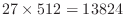 FIR filter
having a cut-off frequency near
FIR filter
having a cut-off frequency near  . It turns out that optimal
Chebyshev design procedures such as the Remez multiple exchange algorithm
used in the Parks-McLellan software
[362] can only handle filter lengths up to a couple hundred
or so. It is therefore necessary to use an FIR filter design method which
works well at such very high orders, and the window method employed here is
one such method.
. It turns out that optimal
Chebyshev design procedures such as the Remez multiple exchange algorithm
used in the Parks-McLellan software
[362] can only handle filter lengths up to a couple hundred
or so. It is therefore necessary to use an FIR filter design method which
works well at such very high orders, and the window method employed here is
one such method.
It is worth noting that a given percentage increase in the original
sampling rate (``oversampling'') gives a larger percentage savings in
filter computation time, for a given quality specification, because the
added bandwidth is a larger percentage of the filter transition bandwidth
than it is of the original sampling rate. For example, given a cut-off
frequency of kHz, (ideal for audio work), the transition band
available with a sampling rate of  kHz is about
  kHz, while a
 kHz sampling rate provides a
  kHz transition band. Thus, a
 % increase in sampling rate halves the work per sample in
the digital lowpass filter.
% increase in sampling rate halves the work per sample in
the digital lowpass filter.
Choice of Table Size and Word Lengths
It is desirable that the stored filter impulse response be sampled
sufficiently densely so that interpolating linearly between samples
does not introduce error greater than the quantization error. It is
shown in [462] that this condition is satisfied
when the filter impulse-response table contains at least
 entries per ``zero-crossing'', where is the
number of bits allocated to each table entry. (A later, sharper,
error bound gives that
entries per ``zero-crossing'', where is the
number of bits allocated to each table entry. (A later, sharper,
error bound gives that
 is sufficient.) It is
additionally shown in [462] that the number of bits in the interpolation
between impulse-response samples should be near
is sufficient.) It is
additionally shown in [462] that the number of bits in the interpolation
between impulse-response samples should be near  or more. With these
choices, the linear interpolation error and the error due to quantized
interpolation factors are each about equal to the coefficient
quantization error. A signal resampler designed according to these
rules will typically be limited primarily by the lowpass filter
design, rather than by quantization effects.
or more. With these
choices, the linear interpolation error and the error due to quantized
interpolation factors are each about equal to the coefficient
quantization error. A signal resampler designed according to these
rules will typically be limited primarily by the lowpass filter
design, rather than by quantization effects.
Next Section:
Summary of Windowed Sinc Interpolation
Previous Section:
From Theory to Practice