Outline
In this chapter, we will look at a variety of ways to digitize
macroscopic point-to-point transfer functions  corresponding to a desired impulse response
  :
:
- Sampling to get
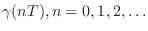
- Pole mappings (such as
 followed by Prony's method)
- Modal expansion
- Frequency-response matching using digital filter design methods
Next, we'll look at the more specialized technique known as commuted synthesis, in which computational efficiency may be greatly increased by interchanging (``commuting'') the series order of component transfer functions. Commuted synthesis delivers large gains in efficiency for systems with a short excitation and high-order resonators, such plucked and struck strings. In Chapter 9, commuted synthesis is applied to piano modeling.
Extracting the least-damped modes of a transfer function for separate parametric implementation is often used in commuted synthesis. We look at a number of ways to accomplish this goal toward the end of this chapter.
We close the chapter with a simple example of transfer-function modeling applied to the digital phase shifter audio effect. This example classifies as virtual analog modeling, in which a valued analog device is converted to digital form in a way that preserves all valued features of the original. Further examples of transfer-function models appear in Chapter 9.
Next Section:
State Space Approach to Modal Expansions
Previous Section:
Practical Considerations