Sign in

username:

password:


Not a member?

Search Online Books


Search tips

Free Online Books

Sponsor

NEW! TMS320C6474: 3x the performance. 1/3 the cost. Three 1 GHz cores on 1 chip.

Chapters

Chapter Contents:

Search Spectral Audio Signal Processing


Book Index | Global Index


Would you like to be notified by email when Julius Orion Smith III publishes a new entry into his blog?


COLA Examples

The constant-overlap-add examples we've seen so far are the

  • Rectangular window at 0% overlap (hop size $ R$ = window size $ M$).
  • Bartlett window at 50% overlap ( $ R\approx M/2$) (Since normally $ M$ is odd, `` $ R\approx M/2$'' means ``R=(M-1)/2,'' etc.)
  • Hamming window at 50% overlap ( $ R\approx M/2$)
In addition, we can mention the following cases (referring to window types discussed in Chapter 3):
  • Rectangular window at 50% overlap ( $ R\approx M/2$)
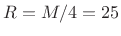
  • Hamming window at 75% overlap ($ R=M/4=25$% hop size)
  • Any member of the Generalized Hamming family at 50% overlap
  • Any member of the Blackman family at 2/3 overlap (1/3 hop size); e.g., blackman(33,'periodic'), $ R=11$
  • Any member of the $ L$-term Blackman-Harris family with $ R\approx M/L$.
  • Any window with R=1 (``sliding FFT'')
Recall from §3.2.6 that many audio coders use the MLT sine window. The window is applied twice: once before the FFT (the ``analysis window'') and secondly after the inverse FFT prior to reconstruction by overlap-add (the so-called ``synthesis window''). Since the window is effectively squared, it functions as a Hann window for overlap-add purposes (a member of the Generalized Hamming family). As such, it can be used with 50% overlap. More generally, any positive COLA window can be split into an analysis and synthesis window pair by taking its square root.


Order a Hardcopy of Spectral Audio Signal Processing

Previous: Overlap-Add Decomposition

Next: STFT of COLA Decomposition

written by Julius Orion Smith III
Julius Smith's background is in electrical engineering (BS Rice 1975, PhD Stanford 1983). He is presently Professor of Music and Associate Professor (by courtesy) of Electrical Engineering at Stanford's Center for Computer Research in Music and Acoustics (CCRMA), teaching courses and pursuing research related to signal processing applied to music and audio systems. See http://ccrma.stanford.edu/~jos/ for details.


Comments


No comments yet for this page


Add a Comment
You need to login before you can post a comment (best way to prevent spam). ( Not a member? )