MPEG Layer III Filter Bank
MPEG 1 and 2, Layer III is popularly known as ``MP3 format.'' The original MPEG 1 and 2, Layers I and II, based on the MUSICAM coder, contained only 32 subbands, each band approximately 650 Hz wide, implemented using a length 512 lowpass-prototype window, lapped (``time aliased'') by factor of 512/32 = 16, thus yielding 32 real bands with 96 dB of stop-band rejection, and having a hop size of 32 samples [149, §4.1.1]. It was found, however, that a higher coding gain was obtained using a finer frequency resolution. As a result, the MPEG 1&2 Layer III coder (based on the ASPEC coder from AT&T), appended a Princen-Bradley filter bank [214] having 6 to 18 subbands to the output of each subband of the 32-channel PQMF cosine-modulated analysis filter bank [149, § 4.1.2]. The number of sub-bands and window shape were chosen to be signal-dependent as follows:
- Transients use
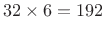 subbands, corresponding to relatively
high time resolution and low frequency resolution.
subbands, corresponding to relatively
high time resolution and low frequency resolution.
- Steady-state tones use
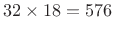 subbands, corresponding to higher
frequency resolution and lower time resolution relative to
transients.12.3
subbands, corresponding to higher
frequency resolution and lower time resolution relative to
transients.12.3
- The encoder generates a function called the perceptual entropy (PE) which tells the coder when to switch resolutions.
The MPEG AAC coder is often regarded as providing nearly twice the
compression ratio of ``MP3'' (MPEG 1-2 Layer III) coding at the same
quality level.12.4 MPEG AAC
introduced a new MDCT filter bank that adaptively switches between 128
and 1024 bands (length 256 and 2048 FFT windows, using 50% overlap)
[149, §4.1.6]. The nearly doubled number of frequency
bands available for coding steady-state signal intervals contributed
much to the increased coding gain of AAC over MP3. The 128-1024 MDCT
filter bank in AAC is also considerably simpler than the hierarchical
 -
- MP3 filter bank, without requiring the ``cross-talk
aliasing reduction'' needed by the PQMF/MDCT hierarchical filter bank
of MP3 [149, §4.1.6].
MP3 filter bank, without requiring the ``cross-talk
aliasing reduction'' needed by the PQMF/MDCT hierarchical filter bank
of MP3 [149, §4.1.6].
The MPEG-4 audio compression standard (there was no MPEG-3), included a new transform coder based on the AAC filter bank [149, §4.1.7].
See, e.g., [16,273] for much more on MPEG coders and related topics. Chapter 4 of [149] contains an excellent summary of MPEG, Sony ATRAC, and Dolby AC-n coders up to 1998.
Next Section:
STFT, Rectangular Window, No Overlap
Previous Section:
Perfect Reconstruction Cosine Modulated Filter Banks