Sign in

username:

password:


Not a member?

Search Online Books


Search tips

Free Online Books

Chapters

Chapter Contents:

Search Physical Audio Signal Processing


Book Index | Global Index


Would you like to be notified by email when Julius Orion Smith III publishes a new entry into his blog?


Physical Derivation of Series Reflection Coefficient

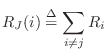
Physically, the force-wave reflection coefficient seen at port $ i$ of a series adaptor is due to an impedance step from $ R_i$, that of the port interface, to a new impedance consisting of the series combination of all other port impedances meeting at the junction. Let
$\displaystyle R_J(i) \isdef \sum_{i\neq j} R_i \protect$ (Q.35)

denote this series combination. Then we must have, as in Eq.$ \,$(Q.25),

$\displaystyle \rho_i = \frac{R_J(i)-R_i}{R_J(i)+R_i}$ (Q.36)

Let's check this ``physical'' derivation against the formal definition Eq.$ \,$(Q.31) leading to $ \rho^v_i = \beta_i - 1$ in Eq.$ \,$(Q.33). Define the total junction impedance as

$\displaystyle R_J \isdef \sum_{j=1}^N R_j
$

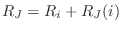
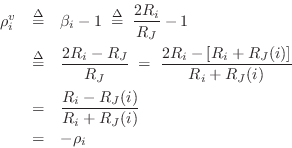
This is the series combination of all impedances connected to the junction. Then by Eq.$ \,$(Q.35), $ R_J = R_i + R_J(i)$ for all $ i$. From Eq.$ \,$(Q.26), the velocity reflection coefficient is given by
\begin{eqnarray*}
\rho^v_i &\isdef & \beta_i - 1
\;\isdef \; \frac{2R_i}{R_J} -...
..._J(i)}\\
&=& \frac{R_i - R_J(i)}{R_i + R_J(i)}\\
&=& -\rho_i
\end{eqnarray*}

Since

$\displaystyle \rho^v_i\isdef \frac{v^{-}_i(n)}{v^{+}_i(n)} = \frac{-f^{{-}}_i(n)/R_i}{f^{{+}}_i(n)/R_i}
= - \frac{f^{{-}}_i(n)}{f^{{+}}_i(n)} \isdef -\rho_i
$

the result follows.


Order a Hardcopy of Physical Audio Signal Processing

Previous: Reflection Coefficient, Series Case

Next: Series Reflection Free Port

written by Julius Orion Smith III
Julius Smith's background is in electrical engineering (BS Rice 1975, PhD Stanford 1983). He is presently Professor of Music and Associate Professor (by courtesy) of Electrical Engineering at Stanford's Center for Computer Research in Music and Acoustics (CCRMA), teaching courses and pursuing research related to signal processing applied to music and audio systems. See http://ccrma.stanford.edu/~jos/ for details.