Arctangent Approximations for

This subsection provides further details on the arctangent approximation for the optimal allpass coefficient as a function of sampling rate. Compared with other spline or polynomial approximations, the arctangent form
![$\displaystyle \rho _{\mathbf\gamma}(f_s) \isdef \max\left\{0,\gamma_1\left[{2\over\pi}\arctan(\gamma_2f_s)\right]^{{1\over2}}+\gamma_3 \right\}
$](http://www.dsprelated.com/josimages_new/sasp2/img2938.png)
was found to provide a more parsimonious expression at a given accuracy level. The idea was that the arctangent function provided a mapping from the interval
 , the domain of
  , to the interval
  ,
the range of
,
the range of
 . The additive component
  allowed
 to be zero at smaller sampling rates, where the Bark scale is
linear with frequency. As an additional benefit, the arctangent expression
was easily inverted to give sampling rate
in terms of the allpass
coefficient
to be zero at smaller sampling rates, where the Bark scale is
linear with frequency. As an additional benefit, the arctangent expression
was easily inverted to give sampling rate
in terms of the allpass
coefficient
 :
:
![$\displaystyle f_s= {1\over \gamma_2}\tan\left[{\pi\over2} \left(\frac{\rho _{\mathbf\gamma}- \gamma_3}{\gamma_1}\right)^2\right].
$](http://www.dsprelated.com/josimages_new/sasp2/img2945.png)
To obtain the optimal arctangent form
 , the expression for
in (E.3.5) was optimized with respect to its free
parameters
, the expression for
in (E.3.5) was optimized with respect to its free
parameters
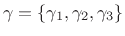 to match the optimal
Chebyshev allpass coefficient as a function of sampling rate:
to match the optimal
Chebyshev allpass coefficient as a function of sampling rate:
![$\displaystyle \rho ^*_{\mathbf\gamma}(f_s) \isdef \hbox{Arg}\left[\min_{{\mathbf\gamma}}\left\{\left\Vert\,\rho ^*_\infty(f_s) - \rho _{\mathbf\gamma}(f_s)\,\right\Vert _\infty\right\}\right].
$](http://www.dsprelated.com/josimages_new/sasp2/img2947.png)
For a Bark warping, the optimized arctangent formula was found to be
![$\displaystyle \rho ^*_{\mathbf\gamma}(f_s) = 1.0674\left[{2\over\pi}\arctan(0.06583f_s)\right]^{{1\over2}}-0.1916,
$](http://www.dsprelated.com/josimages_new/sasp2/img2948.png)
where
is expressed in units of kHz. This formula is plotted along
with the various optimal  curves in Fig.E.3a, and the
approximation error is shown in Fig.E.3b. It is extremely accurate
below 15 kHz and near 40 kHz, and adds generally less than 0.1 Bark to the
peak error at other sampling rates. The rms error versus sampling rate is
very close to optimal at all sampling rates, as Fig.E.4 also
shows.
curves in Fig.E.3a, and the
approximation error is shown in Fig.E.3b. It is extremely accurate
below 15 kHz and near 40 kHz, and adds generally less than 0.1 Bark to the
peak error at other sampling rates. The rms error versus sampling rate is
very close to optimal at all sampling rates, as Fig.E.4 also
shows.
When the optimality criterion is chosen to minimize relative bandwidth mapping error (relative map slope error), the arctangent formula optimization yields
![$\displaystyle \rho ^*_{\mathbf\gamma}(f_s) = 1.0480\left[{2\over\pi}\arctan(0.07212f_s)\right]^{{1\over2}}-0.1957.
$](http://www.dsprelated.com/josimages_new/sasp2/img2949.png)
The performance of this formula is shown in Fig.E.8. It tends to follow the performance of the optimal least squares map parameter even though the peak parameter error was minimized relative to the optimal Chebyshev map. At 54 kHz there is an additional 3% bandwidth error due to the arctangent approximation, and near 10 kHz the additional error is about 4%; at other sampling rates, the performance of the RBME arctangent approximation is better, and like (E.3.5), it is extremely accurate at 41 kHz.
Next Section:
Filter Design Example
Previous Section:
Error Significance