







DSPRelated.com
Music Signal Processing

Music Signal Processing

Saeed V. Vaseghi
Still RelevantIntermediate

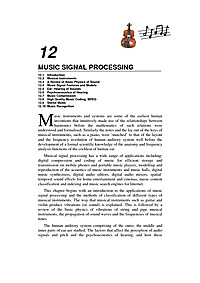
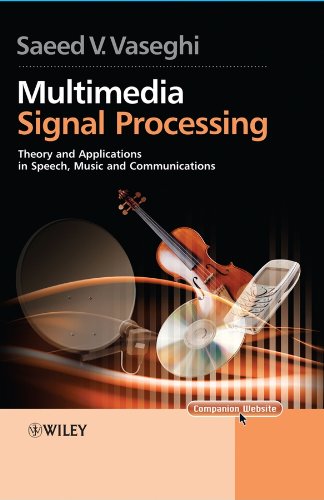
Chapter 12 of the book "Multimedia Signal Processing: Theory and Applications in Speech, Music and Communications" - Musical Instruments - A Review of Basic Physics of Sound - Music Signal Features and Models - Ear: Hearing of Sounds - Psychoacoustics of Hearing - Music Compression - High Quality Music Coding: MPEG - Stereo Music - Music Recognition

Summary

This chapter surveys signal-processing methods applied to music, covering instrument acoustics, sound physics, psychoacoustics, feature extraction, and music coding. Readers will gain both theoretical background and practical descriptions of techniques used for music analysis, compression (MPEG), stereo processing, and recognition.

Key Takeaways

  • Explain the basic physics of musical sound and how instrument characteristics map to signal features
  • Apply spectral analysis (FFT) and time-frequency techniques to extract music features such as pitch, timbre, and onsets
  • Implement psychoacoustic models and perceptual coding principles used in high-quality music codecs (MPEG)
  • Design and evaluate feature pipelines for music recognition and classification using statistical and machine-learning methods
  • Assess stereo and spatial audio processing methods and their effects on perceived music quality

Who Should Read This

Intermediate-level DSP engineers, audio researchers, and graduate students working on music/audio analysis, compression, or music information retrieval who want practical and theoretical coverage of music signal processing techniques.

Still RelevantIntermediate

Topics

Audio ProcessingFFT/Spectral AnalysisStatistical Signal ProcessingMachine Learning

Related Documents







