







DSPRelated.com
Evaluate Noise Performance of Discrete-Time Differentiators

Evaluate Noise Performance of Discrete-Time Differentiators

Neil Robertson
Still RelevantIntermediate

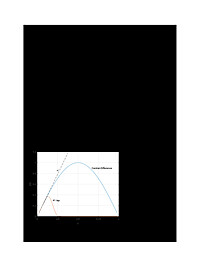
When it comes to noise, all differentiators are not created equal.  Figure 1 shows the magnitude response of two differentiators.  They both have a useful bandwidth of a little less than π/8 radians (based on maximum magnitude response...



Summary

This blog analyzes how different discrete-time differentiator implementations amplify noise and how that depends on their frequency responses and usable bandwidth. The reader will learn methods to evaluate SNR impact, compare magnitude responses, and apply practical filter-design choices to limit noise in derivative estimation.

Key Takeaways

  • Quantify the noise amplification of common discrete-time differentiators using their magnitude response and bandwidth metrics
  • Compare useful bandwidths and spectral behavior to choose a differentiator topology that minimizes noise for a given application
  • Estimate SNR degradation from differentiation and relate it to filter order, passband shape, and implementation choice
  • Apply practical design rules (bandwidth limiting, windowing, and trade-offs between accuracy and noise) when designing differentiator filters

Who Should Read This

Intermediate DSP engineers or researchers working on audio, speech, radar, or communications who need to design or evaluate discrete-time differentiators and understand their noise implications.

Still RelevantIntermediate

Topics

Filter DesignFFT/Spectral AnalysisStatistical Signal Processing

Related Documents





