Digital Waveguide (DW) Scheme
We now derive the digital waveguide formulation by sampling the
traveling-wave solution to the wave equation. It is easily
checked that the lossless 1D wave equation
 is solved
by any string shape
is solved
by any string shape  which travels to the left or right with speed
 [100]. Denote
right-going traveling waves in general by
[100]. Denote
right-going traveling waves in general by
 and
left-going traveling waves by
and
left-going traveling waves by
 , where
  and
and
 are assumed twice-differentiable. Then, as is well known, the
general class of solutions to the lossless, one-dimensional,
second-order wave equation can be expressed as
are assumed twice-differentiable. Then, as is well known, the
general class of solutions to the lossless, one-dimensional,
second-order wave equation can be expressed as

Sampling these traveling-wave solutions yields



![$\displaystyle y_r[(n-m)T] + y_l[(n+m)T]$](http://www.dsprelated.com/josimages_new/pasp/img4515.png)


where a ``
 '' superscript denotes a ``right-going'' traveling-wave
component, and ``
'' superscript denotes a ``right-going'' traveling-wave
component, and `` '' denotes propagation to the ``left''. This
notation is similar to that used for acoustic-tube modeling of speech
[297].
'' denotes propagation to the ``left''. This
notation is similar to that used for acoustic-tube modeling of speech
[297].
 .
.![\includegraphics[width=\twidth]{eps/fidealCopy}](http://www.dsprelated.com/josimages_new/pasp/img4517.png)
Figure E.1 (initially given as Fig.C.3)
shows a signal flow diagram for the computational model of
Eq. (E.5), termed a digital waveguide model (developed
in detail in Appendix C). Recall that, by the sampling theorem, it
is an exact model so long as the initial conditions and any ongoing
additive excitations are bandlimited to less than half the temporal
sampling rate
(E.5), termed a digital waveguide model (developed
in detail in Appendix C). Recall that, by the sampling theorem, it
is an exact model so long as the initial conditions and any ongoing
additive excitations are bandlimited to less than half the temporal
sampling rate  [451, Appendix G]. Recall also that
the position along the string,
[451, Appendix G]. Recall also that
the position along the string,
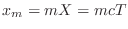 meters, is laid
out from left to right in the diagram, giving a physical
interpretation to the horizontal direction in the diagram, even though
spatial samples have been eliminated from explicit consideration. (The
arguments of
meters, is laid
out from left to right in the diagram, giving a physical
interpretation to the horizontal direction in the diagram, even though
spatial samples have been eliminated from explicit consideration. (The
arguments of  and
and  have physical units of time.)
The left- and right-going traveling wave components are summed to produce a physical output according to

In Fig.E.1, ``transverse displacement outputs'' have been arbitrarily placed at
 and
and  .
.
Next Section:
FDTD and DW Equivalence
Previous Section:
Finite Difference Time Domain (FDTD) Scheme